
1. THE HIDDEN COST OF THE GREEN FACADE
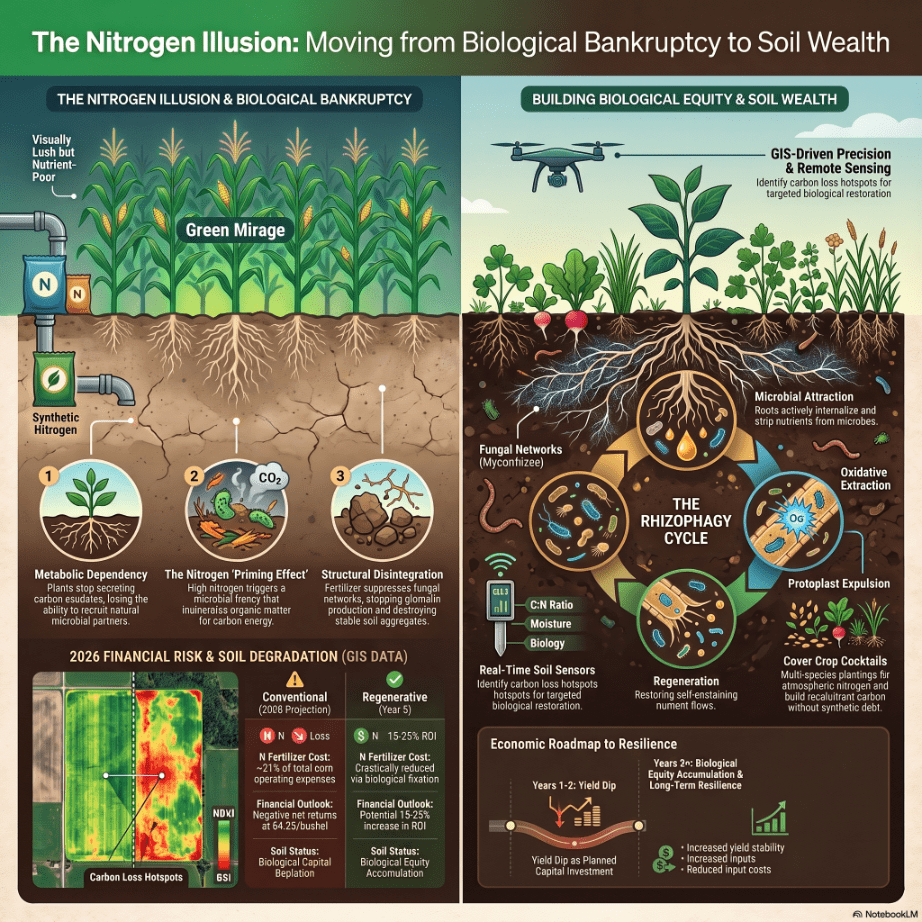
In the industrial agricultural landscape of 2026, many farms present a lush, vibrant green facade that masks a deepening biological crisis. While crops may appear healthy to the untrained eye, this visual success is essentially a “high-interest loan” taken against the soil’s natural capital. Synthetic nitrogen provides an immediate growth spike, but it functions as a chemical crutch that leads to metabolic dependency. This is not mere production; it is Biological Capital Depreciation.
As plants become reliant on these external inputs, they lose their inherent evolutionary capacity to seek nutrients independently. Their subsurface infrastructure—the complex root-to-microbe signaling pathways—atrophies. This transition creates a system where the crop is no longer a part of a self-sustaining ecosystem but is instead a component of an industrial process vulnerable to the slightest disruption in energy markets.
Reality Check: Visual Health vs. Biological Bankruptcy
- Visual: Dark green, vigorous foliage resulting from high nitrate uptake. Reality: Weakened cellular structures and increased pest vulnerability due to skewed protein synthesis.
- Visual: Rapid vertical growth and early-season biomass. Reality: Root system atrophy; plants fail to develop the expansive networks required to access deep-well minerals and water.
- Visual: Uniform crop appearance across the field. Reality: Soil Organic Matter (SOM) depletion; the internal “biological bank account” is being drained to sustain short-term metabolic surges.
2. THE DIGITAL MAP OF BIOLOGICAL BANKRUPTCY
To decode this decline, we must look beyond the visible spectrum. Modern diagnostics, specifically the integration of Sentinel-2A (S2A) satellite imagery and Geographic Information Systems (GIS), have provided a clear map of biological bankruptcy. Unlike older systems like Landsat-8, S2A offers 10-meter resolution and specialized red-edge vegetation bands that allow us to monitor the subtle physiological stress and nitrogen content of crops with unprecedented precision.
Using the Revised Universal Soil Loss Equation (RUSLE), we can now quantify how industrial reliance on synthetics accelerates physical degradation. A primary driver is the “Microbial Feeding Frenzy.” When excessive synthetic nitrogen is applied, it creates a massive Carbon-to-Nitrogen (C:N) ratio imbalance. To metabolize this nitrogen surge, microbes are forced to “incinerate” soil organic matter to find the carbon they need for balance. This process physically destroys the soil structure, leading to the collapse of mycorrhizal networks—the soil’s primary “immune system.”
Mapping these anomalies allows us to see the long-term impact of legacy industrialism. For instance, in the El-Minya region of Egypt, GIS analysis can still detect the biological footprints of waste from the Abu Qurqas sugar plant, which has impacted soil chemistry for a century. Today, data-driven modeling shows that without biological intervention, high-input areas in arid zones face a staggering rate of soil loss.
The Anatomy of Soil Erosion (El-Minya Study Data)
| Erosion Category | Soil Loss Impact (t ha⁻¹ y⁻¹) | Total Area (%) |
| Slight Erosion | < 5 | 29.28% |
| Low Erosion | 5 – 10 | 17.61% |
| Moderate Erosion | 10 – 15 | 32.89% |
| Moderately High Erosion | 25 – 70 | 20.22% |
3. THE ADDICTIVE CYCLE OF CHEMICAL CRUTCHES
The reliance on synthetic nitrogen has trapped global agriculture in a cycle of diminishing returns. We have reached a tipping point where many industrial farms require exponentially more input just to maintain plateauing yields. This dependency represents a catastrophic strategic risk.
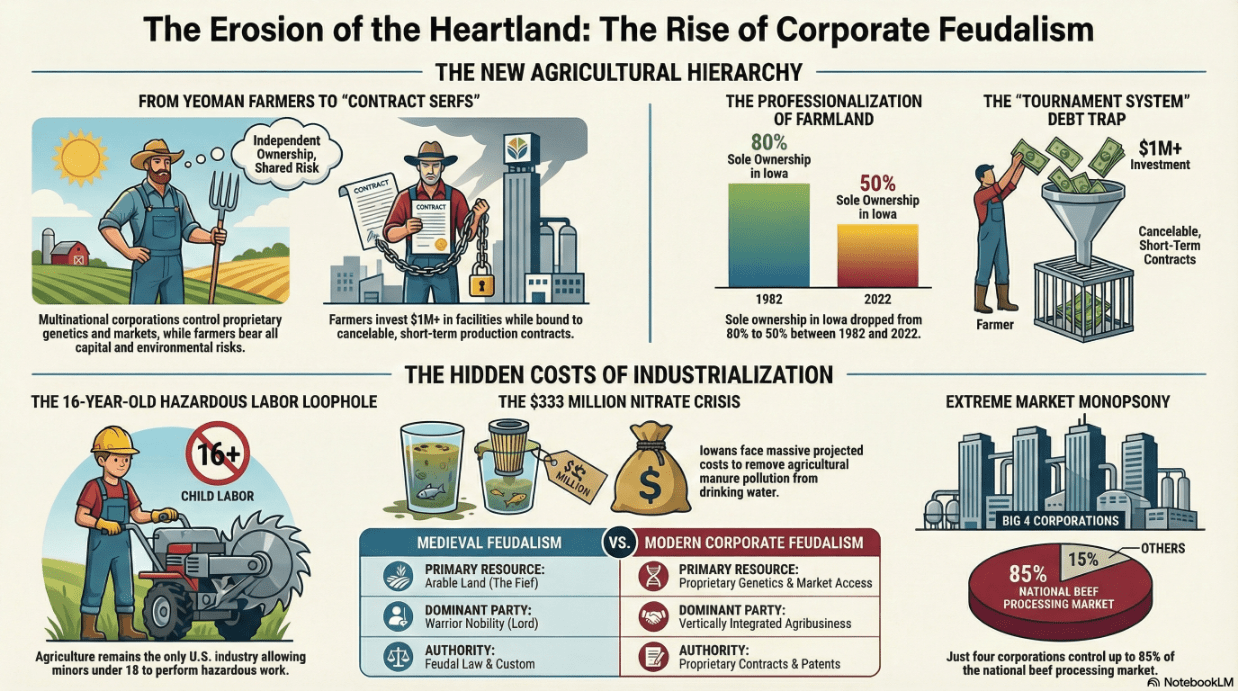
The vulnerability of this model is exposed by geopolitical volatility. The Gulf region produces approximately one-third of global urea and a massive share of ammonia exports. When energy prices surge or trade routes are disrupted, the cost of production for the average farmer skyrockets, proving that the current system is built on a foundation of sand. We are no longer farming biology; we are arbitrage-trading fossil fuels through the medium of soil.
The Volatility Risk Profile
- Energy-Driven Inflation: Synthetic fertilizer production is a direct hostage of the gas and oil markets, making food security a byproduct of fossil fuel pricing.
- Centralized Vulnerability: Relying on a handful of global exporters for nitrogen means local farm stability is dictated by distant geopolitical shocks.
- Biological Equity Erosion: As C:N imbalances destroy soil structure, the land’s water-holding capacity collapses, increasing the “interest rate” farmers pay in irrigation and rescue chemistry.
4. ARCHITECTING THE GREAT REGENERATION
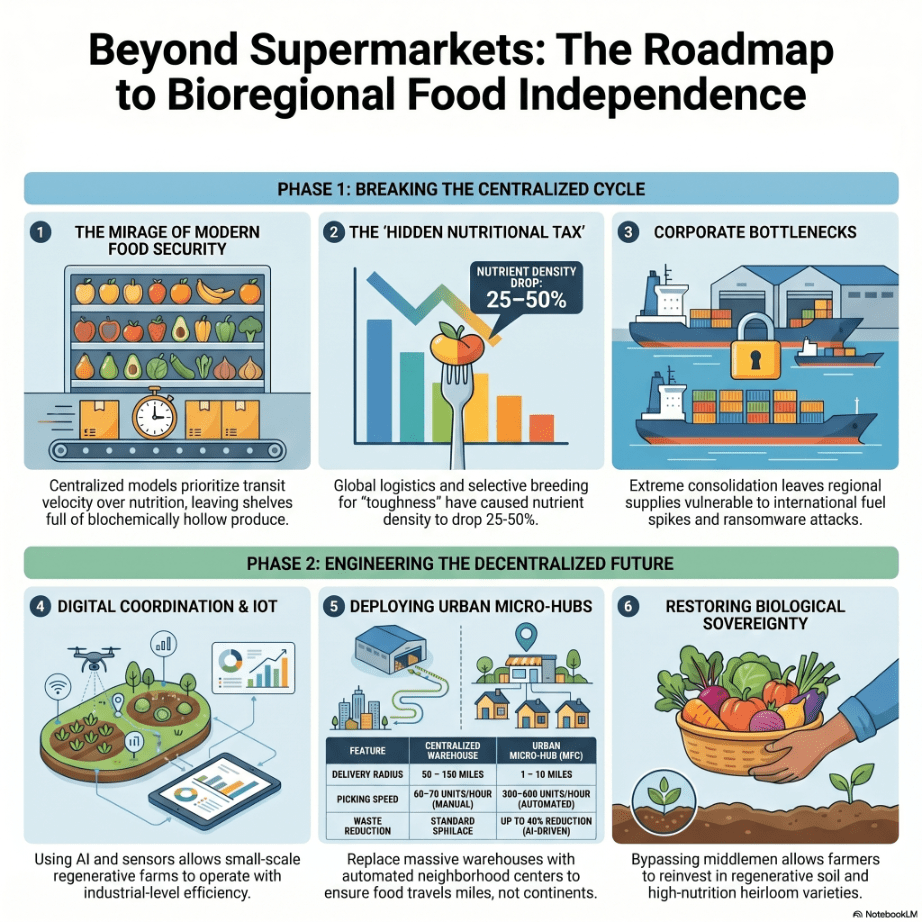
The transition to a regenerative model is a pivot toward asset management. By leveraging decentralized tech, we can now use Ordinary Kriging (OK) and Gaussian Processes Regression to predict soil health in unsampled sites, creating high-fidelity biological maps. This allows for precision application of inputs only when and where the soil’s “biological equity” requires it.
We are shifting from synthetic dependency to natural fertility cycles. By using biological inoculants and leguminous cover crops to capture atmospheric nitrogen, we build organic matter that provides a massive Return on Investment (ROI) in the form of increased water retention and nutrient availability. The corporate world is already following the data: Nestlé has committed to sourcing 50% of its key ingredients from regenerative practices by 2030, having already hit a 27.6% milestone by 2025.
Regenerative Toolkit
- Precision Data: Deploying S2A red-edge bands and Gaussian modeling to monitor soil carbon and erosion risk in real-time.
- Biological Inputs: Utilizing manure loops and nutrient recycling to close the circular economy and rebuild soil minerals.
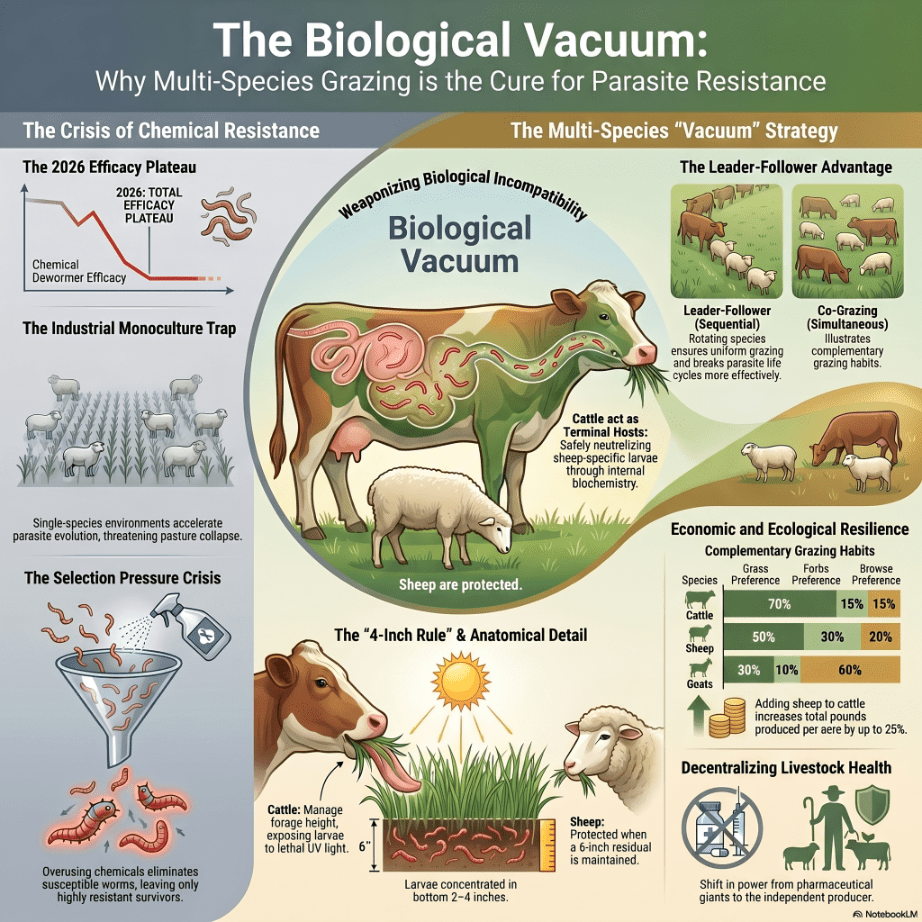
- Natural Fertility Cycles: Restoring the subsurface infrastructure through multi-species cropping to eliminate “ecological debt.”
5. SECURING FUTURE FOOD SOVEREIGNTY
The legacy of the chemical economy is a linear path toward exhaustion. To ensure future food sovereignty, we must transition to a circular, data-driven regenerative ecosystem that builds “biological equity” across generations. Healthy soil with high organic matter is the ultimate hedge against a volatile future; it is a sponge for water and a reservoir for nutrients that legacy systems can only mimic through expensive, destructive chemistry.
This is a data-driven rebellion. By prioritizing the long-term wealth of the soil over the “short-term green” of synthetic addiction, we secure the multi-generational productivity of our land.
Roadmap to 2030
- Baseline Biological Audits: Use Sentinel-2A imagery (10m resolution) and Ordinary Kriging to map current soil carbon levels and legacy industrial anomalies.
- Implementation of Precision Fertilization Technologies: Transition from broad-spectrum application to site-specific nutrient management, utilizing manure loops and organic recycling to reduce urea dependency.
- Ecological Sovereign Integration: Re-establish natural nitrogen fixation through leguminous cover crops and reduced tillage, aiming for a 50% regenerative sourcing threshold to stabilize long-term yields.