
1. Introduction: The 60-Year Expiration Date
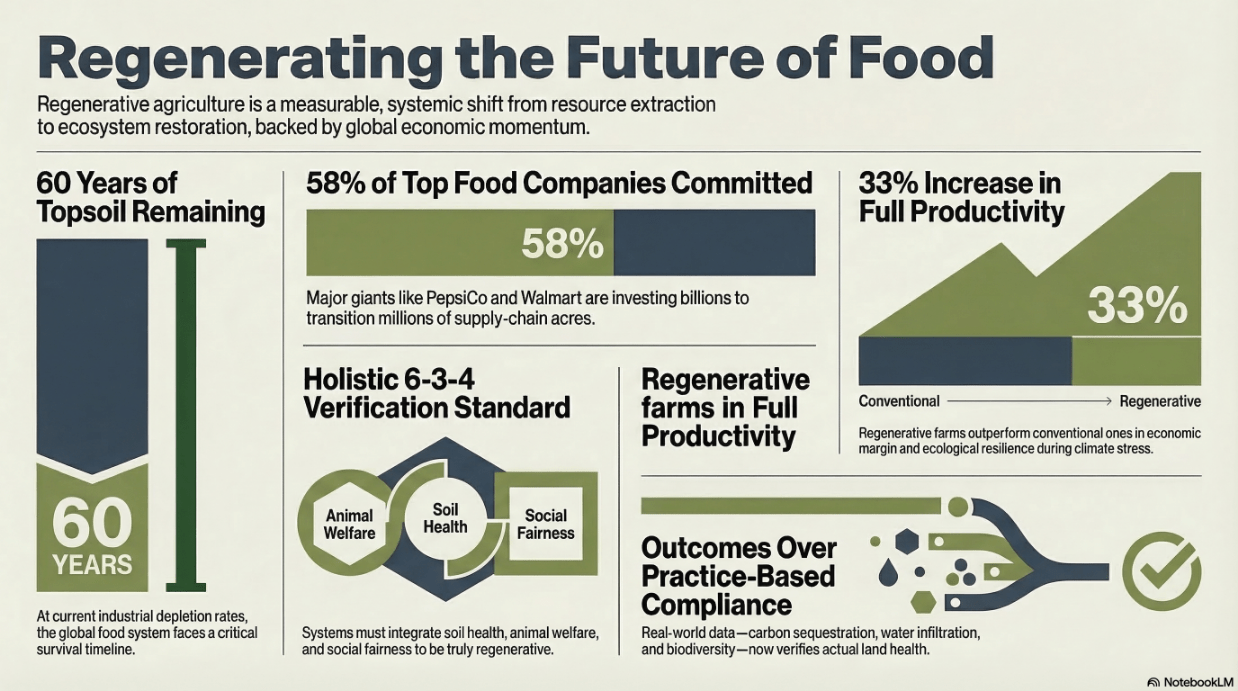
Let’s be honest: our current agricultural model isn’t “farming”—it’s a 60-year Ponzi scheme where we’ve been borrowing from our grandchildren’s lunchboxes to pay for today’s monoculture addiction. According to the grim data from the trenches, we have roughly 60 years of viable topsoil remaining at current industrial extraction rates. After that? The global food system essentially hits “Delete” on productivity.
We’ve spent the last half-century acting as “soil miners,” treating the earth like an ATM that never asks for a deposit. But the ground is pushing back. Your dirt is depressed, exhausted, and functionally dead. The good news? Agriculture has the unique, almost miraculous potential to heal the very ecosystems it’s spent decades bruising. Moving from an extraction-based industrial model to a regenerative system means transitioning from a “soil miner” to a “soil therapist.” We aren’t just growing calories; we are restoring biological functions and giving the land a fighting chance. It’s optimistic, it’s urgent, and yes, it’s slightly absurd that we’ve waited until the 11th hour to realize that microbes have feelings (and utility) too.
——————————————————————————–
2. Decoding the Alphabet Soup (The Certification Maze)
If you thought navigating a tax audit was a headache, welcome to the Thunderdome of regenerative verification. Everyone wants a piece of the “green” pie, but to avoid the inevitable wave of corporate greenwashing, a few heavy hitters have established frameworks with serious technical teeth.
| Certification | The “Vibe” | The Expert Deep-Dive |
| ROC (Regenerative Organic Certified) | The High-Bar Overachiever | Uses USDA Organic as a baseline “floor.” Layers on strict pillars for soil health, animal welfare, and social fairness. Led by OGs like Patagonia and Dr. Bronner’s. |
| EOV (Ecological Outcome Verification) | The Result-Obsessed Scientist | The Savory Institute’s baby. Developed with Michigan State and Texas A&M. Purely outcomes-based; it doesn’t tell you how to farm, it just measures if your soil carbon and biodiversity are actually moving the needle. |
| Regenified (6-3-4 Standard) | The Tiered Overachiever | Founded by legends Gabe Brown and Allen Williams. A 5-tier system evaluating 6 principles and 4 ecosystem processes. Notably the first seal accepted on USDA-inspected products via the AMS Process Verified Program. |
| SCI (Soil Carbon Initiative) | The Big Tent Enthusiast | Open to everyone—conventional, non-GMO, and organic. Focuses on rapidly scaling acreage. Uses the Haney Soil Test to give farmers actionable data on soil health and carbon. |
The Professional Summary:
- Empirical or Bust: Whether it’s EOV’s outcome-based monitoring (now verified on over 6 million acres) or SCI’s rigorous soil testing, the era of “trust me, I’m sustainable” is over.
- The USDA Standard: Regenified has officially broken the seal on federal recognition, meaning “Regenerative” is finally a claim you can take to the bank (and the grocery aisle) without a lawyer on speed dial.
- Continuous Improvement: These aren’t participation trophies. If your land trends toward degeneration, these certifiers take their ball and go home.
——————————————————————————–
3. The Six (Plus Two) Commandments of Happy Dirt
Synthesizing the high-level frameworks from the Soil Carbon Initiative and Regenified, we’ve distilled the “How-To” for the modern soil therapist. If you want to stop making your acreage miserable, start here:
- Minimize Disturbance: Quit the tillage addiction. Every time you flip the soil, you’re basically firebombing the microbial underground party.
- Armor the Soil: Keep it covered. Soil is shy; it hates being naked. Residue and cover crops are its favorite clothes.
- Living Roots: Ensure someone is home in the root zone 365 days a year. No roots, no root exudates; no exudates, no hungry microbes; no hungry microbes, no topsoil.
- Maximize Diversity: Polycultures are the new black. Nature doesn’t do “one-species-only” events. Mix your crops like a high-end cocktail.
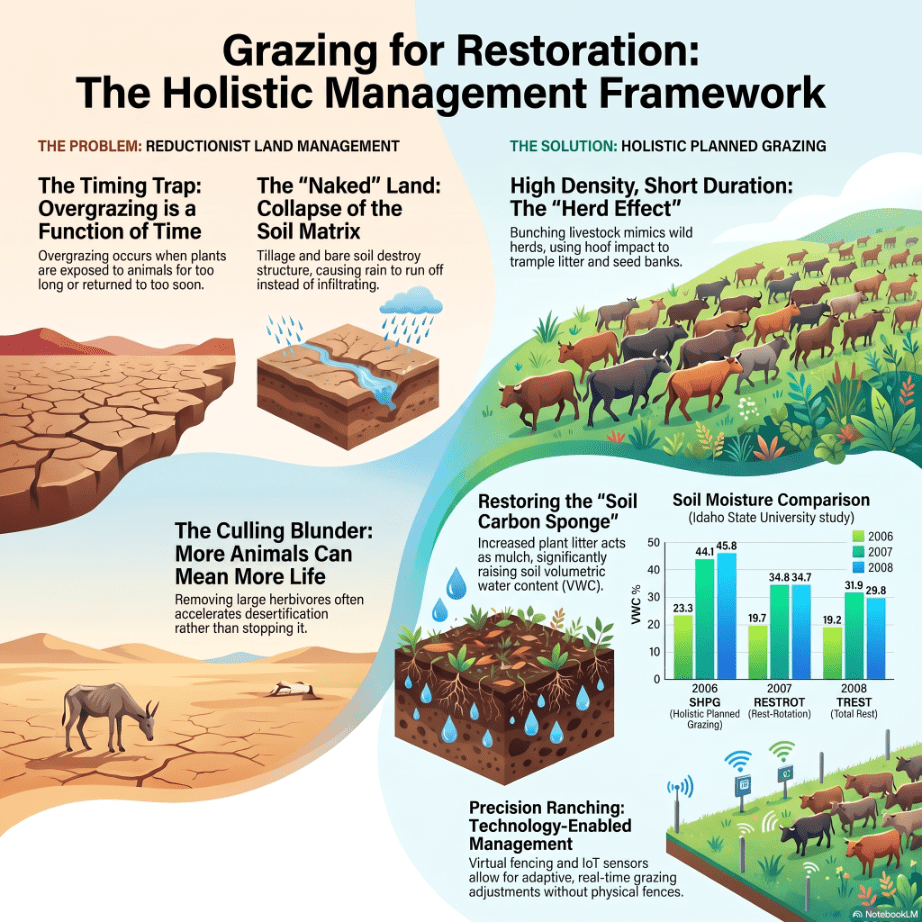
- Integrate Livestock: Animals are the mobile fertilization and stimulation units nature intended. Think holistic grazing, not CAFOs.
- Context: Don’t try to grow mangoes in Montana. Acknowledge your unique climate and soil conditions before you start buying seeds.
- Reduce Synthetic Inputs: Transition away from the chemical crutches that keep the soil in a state of perpetual “rehab.”
- Farmer Learning: Regeneration is a “knowledge economy.” Continuous education is as important as the Haney test results.
——————————————————————————–
4. The Corporate Green Crush: Who’s Sliding Into Your DMs?
Major corporations are suddenly very interested in your dirt, largely because their supply chains are melting. Here is the current “Dating Profile” for the big players:
- PepsiCo: Looking for 7 million acres by 2030. Their “pep+” ambition wants to de-risk regenerative shifts for 250,000 supply chain partners. They’re big on “Lighthouse Programmes” to prove the concept.
- Walmart: Swiping right on 50 million acres of critical commodities. They’ve partnered with the Midwest Row Crop Collaborative (MRCC) to hit 30 million acres in the heartland alone and just dropped $2 million into a Regenerative Cotton Fund.
- Microsoft: The Tech Nerd. They aren’t just buying carbon credits; they’ve built an “AgBot” (an SMS/WhatsApp chatbot) for African farmers to provide climate-smart advisory services via the IFC.
- Patagonia & Dr. Bronner’s: The Regenerative Hipsters. The OGs leading the ROC charge. They were talking about soil organic matter back when everyone else was still worshipping at the altar of glyphosate.
——————————————————————————–
5. Wait, My Doctor is a Farmer Now? (The Health Pivot)
The visionaries at Ethos Farm to Health have decided the hospital of the future shouldn’t smell like bleach—it should smell like fresh compost. Founded by Dr. Ron Weiss, this 125-acre non-profit in New Jersey is the world’s first “farm-based healthcare system.”
Through their Next Generation Physicians program, medical students do month-long rotations in the field. They learn that “Healthy Soil = Healthy Food = Healthy People.” Instead of just memorizing which pill masks which symptom, they’re learning how whole plant foods grown in living soil can prevent and reverse chronic diseases—a curriculum curiously absent from standard medical schools. It turns out lifestyle medicine starts with the microbial life under our fingernails, not the script pad in a sterile office.
——————————————————————————–
6. Survival Kit for the “Middle-Mile” Awkward Phase
Transitioning to regenerative agriculture takes about three years—a period of financial “rehab” where the land is weaning off synthetics and the yields are finding their footing. Here is your transition survival kit:
- Full Harvest: Think of this as “Tinder for ugly carrots.” It’s a B2B marketplace that connects growers with buyers for “off-grade” or surplus produce, turning potential food waste into incremental revenue.
- North Valley Food Hub: The ultimate “one-stop-shop” for Northern California. It’s an aggregator and distributor that gets sustainably grown products into institutional and food service markets without the logistical nightmare.
- Savory Network Hubs: You aren’t alone. There are over 30 global hubs providing training in Holistic Management. Find your tribe before you lose your mind.
- Rodale Institute: The “O.G.” (Original Grower). They’ve been running the Farming Systems Trial since 1981, proving on 333 acres that regenerative organic yields can go toe-to-toe with the chemical guys, especially during droughts.
——————————————————————————–
7. Conclusion: Don’t Let the Microbes Down
We are currently witnessing the pivot from “Industrial Famine”—where the soil is dead and the food is functionally empty—to a “Regenerative Feast.” This isn’t just a trend; it’s a total reimagining of our relationship with the earth.
As we move toward a “food and fiber democracy,” the power returns to the land and the people who steward it. Whether you’re a consumer “voting with your dollars” for EOV-verified seals or a producer finally listening to what your dirt is trying to tell you, remember: this is a journey of continuous improvement, not a static destination.
Give the land a voice. Talk to your microbes. And for the love of all that is holy, quit tilling. Regenerative is the goal, and the microbes are definitely watching.