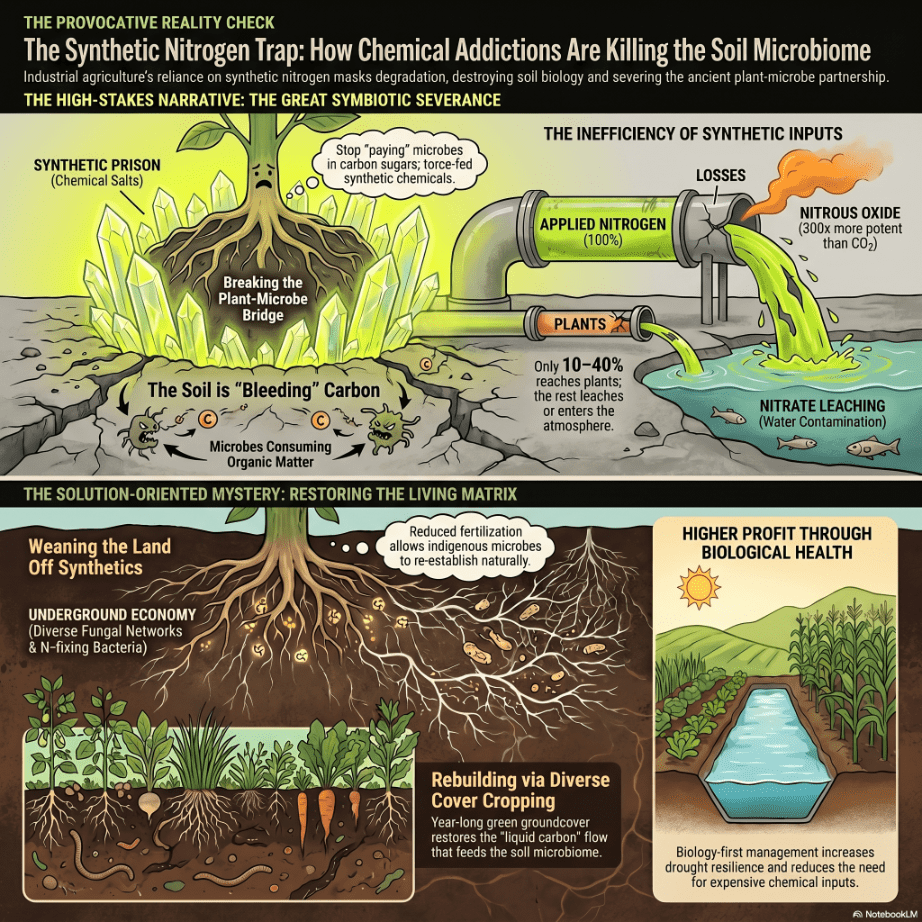

For decades, industrial agriculture has operated under the illusion of a “free lunch.” By applying massive volumes of synthetic nitrogen (N) fertilizers, we have achieved record-breaking yields, but this success has come at a staggering biological cost. We have inadvertently severed the ancient symbiosis between plants and soil biology, transforming…
Information
Read more
The Carbon Sink on Four Legs: Why the Future of the Planet Might Depend on the Cow
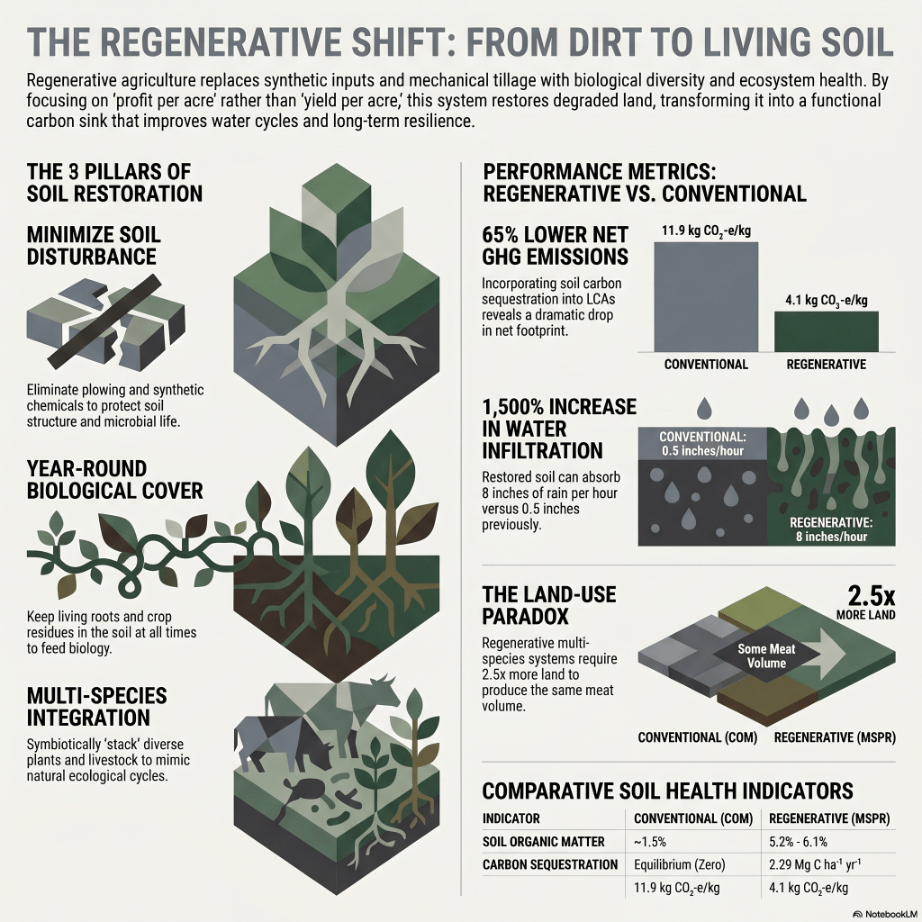
In the dominant environmental discourse, the cow has been cast as a climate pariah. The data, at first glance, seems to justify the trial: livestock contribute more than one-third of all agricultural greenhouse gas emissions. Between the enteric methane produced during digestion and the carbon-intensive infrastructure of industrial feedlots, the…
Information
Read more
The Great American Harvest Myth: 5 Surprising Reasons Why Our Farms Aren’t Feeding Us
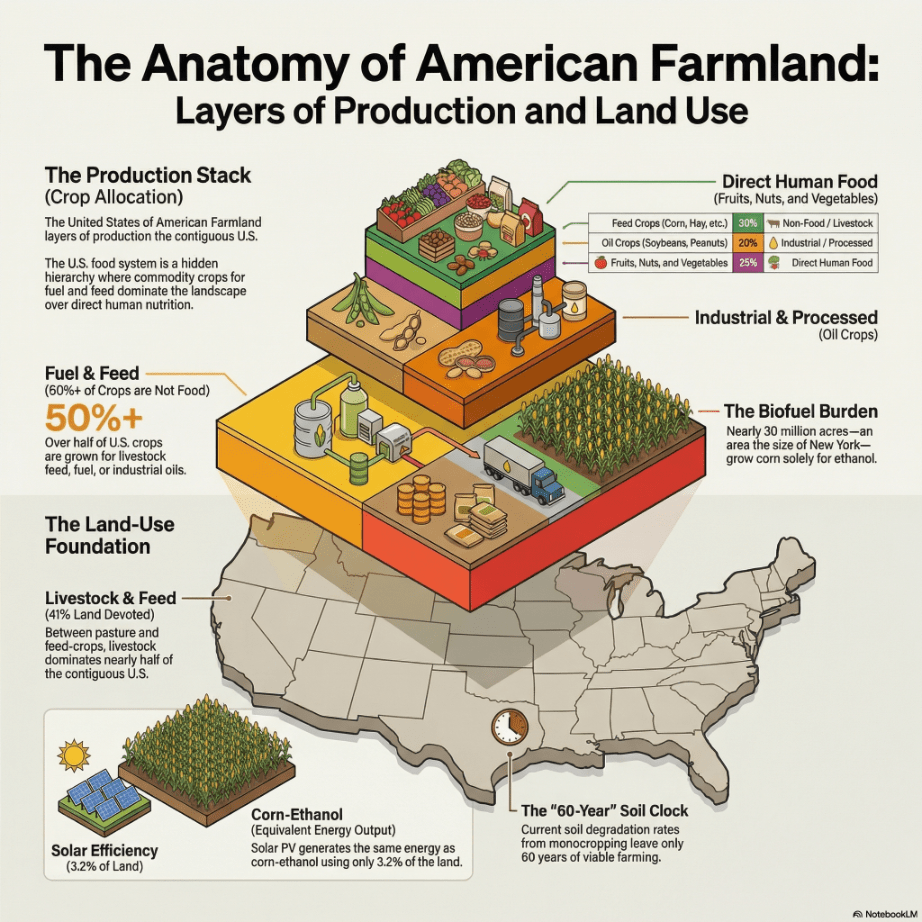
If you take a road trip across the American Heartland, you’ll be met with an endless, shimmering sea of green. Looking at those millions of acres of farmland, it’s easy to buy into the patriotic narrative that the United States is the “food basket of the world.” We produce a…
Information
Read more
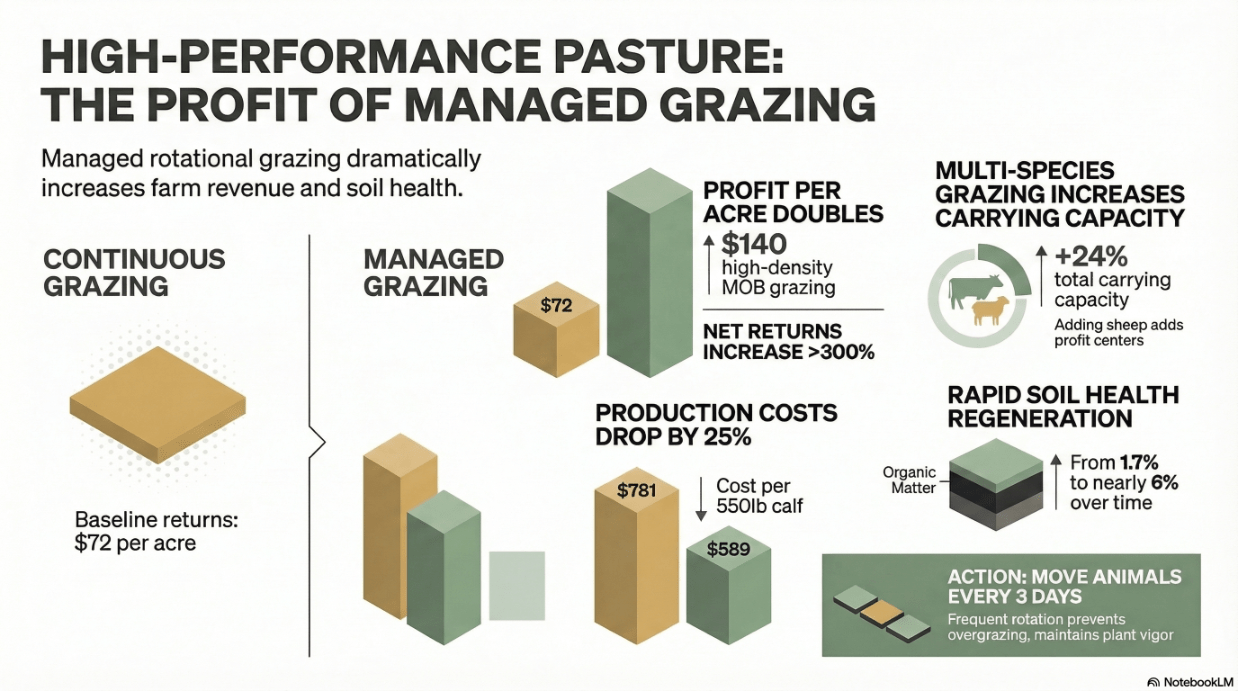
Profit Over Pounds: How Managed Grazing and Soil Intelligence Are Outperforming the Corn Belt
1. Introduction: The Commodity Trap vs. The Regenerative Goldmine For decades, the traditional agricultural model has been defined by the “Commodity Trap”—a grueling cycle where producers work harder to increase volume while remaining at the mercy of fluctuating global prices. Whether you are running a cow-calf operation or high-input row…
Information
Read more
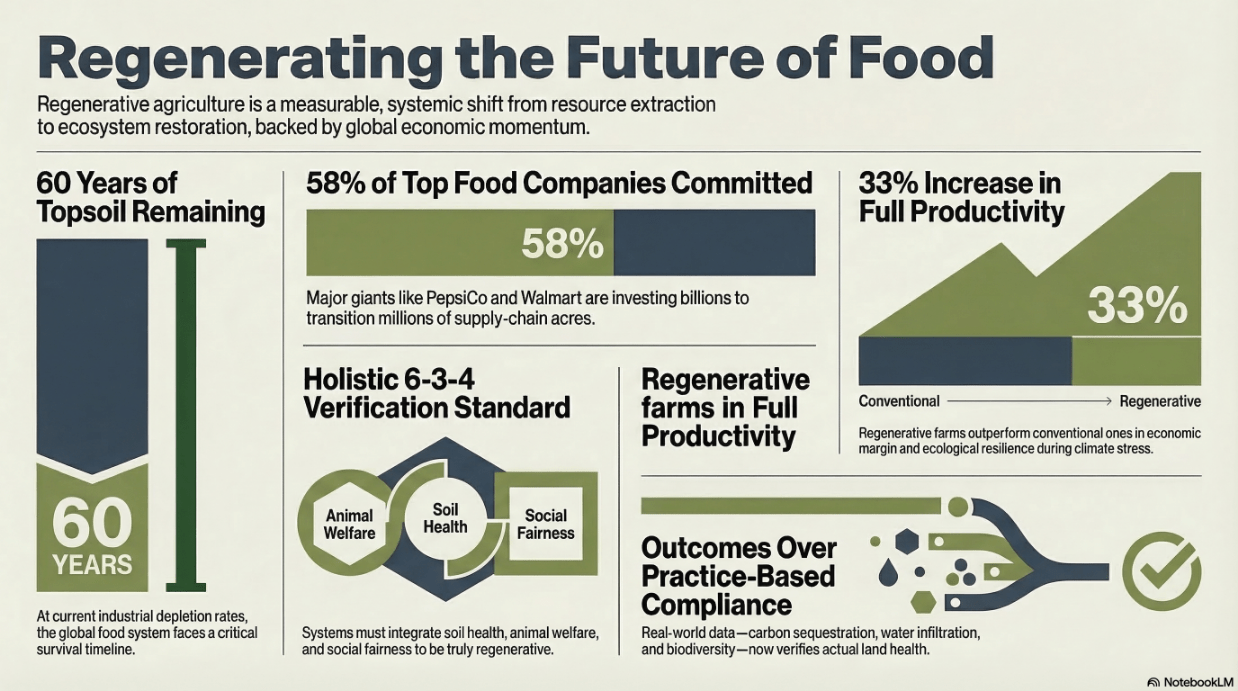
So Your Dirt is Depressed: A Survival Guide to the Regenerative Transition
1. Introduction: The 60-Year Expiration Date Let’s be honest: our current agricultural model isn’t “farming”—it’s a 60-year Ponzi scheme where we’ve been borrowing from our grandchildren’s lunchboxes to pay for today’s monoculture addiction. According to the grim data from the trenches, we have roughly 60 years of viable topsoil remaining…