
1. Introduction: The “National Disaster” on Our Plates
In December 1971, Dr. George Briggs, a Professor of Nutrition at the University of California-Berkeley, issued a chilling warning: the typical American diet had become a “National Disaster.” Briggs famously asserted that if he fed the nutrient-depleted regime of the average citizen to livestock without adding synthetic supplements, the entire industry would be wiped out. Half a century later, this disaster has metastasized into a systemic collapse of food quality. Public confidence in the safety of our food supply reached an all-time low of 55% in 2025, a precipitous drop from 70% just two years prior.
The “Farm, Food, and National Security Act of 2026” (FFNSA) was a pivotal legislative moment where Congress had the opportunity to bridge the gap between agricultural output and public health. Instead, the House Committee on Agriculture chose industrial stability over biological quality. By framing national security through the lens of caloric tonnage and industrial supply-chain “certainty,” the FFNSA effectively codifies a model that sacrifices human vitality for the convenience of commodity markets.
Key Perspective: The Quality Shift We have transitioned from a “Plant Health Diet”—correlated with a 23% reduction in overall mortality—to an industrial model that prioritizes caloric-heavy output. The FFNSA reinforces this shift by incentivizing sheer volume while ignoring the “Nutritional Dark Matter” required to maintain the biochemical integrity of the human food matrix.
——————————————————————————–
2. The Hidden Cost of Tonnage: Volume Over Vitality
While the House Agriculture Committee celebrates record yields, as an agronomist, I must look beyond the bushel. Data from the Heartland Health Research Alliance (HHRA) and the Swette Center reveal that our focus on tonnage masks a massive loss of “Nutritional Dark Matter.” This includes nearly 140,000 health-promoting compounds, over 2,000 of which are utilized as pharmaceuticals in medical contexts.
The FFNSA’s priorities favor industrial supply chains that rely on “Aggressive Milling.” These techniques utilize high heat, pressure, and chemical treatments to physically dismember the kernel to extend shelf life. This biochemical dismemberment uncouples nutrients from the food matrix, transforming complex carbohydrates into rapidly absorbed sugars that trigger metabolic distress. The industrial presumption that synthetic fortification can replace these lost complexities is an unsubstantiated myth; fortification restores only a tiny fraction of the hundreds of phytochemicals destroyed.
The Quality Gap: Industrial Milling vs. Biological Density
| Metric | Industrial Milling (FFNSA Priority) | Biological Density (Small/Regenerative) |
| What’s Lost | ~75% of minerals; destruction of thiamine, vitamin B, and folate. | Preservation of soil-derived minerals and microbial metabolites (e.g., ergothioneine). |
| What’s Added | Synthetic fortification; high-glycemic refined carbohydrates; added salt/fats. | Co-evolved phytochemical assortments and intact fiber-to-sugar ratios. |
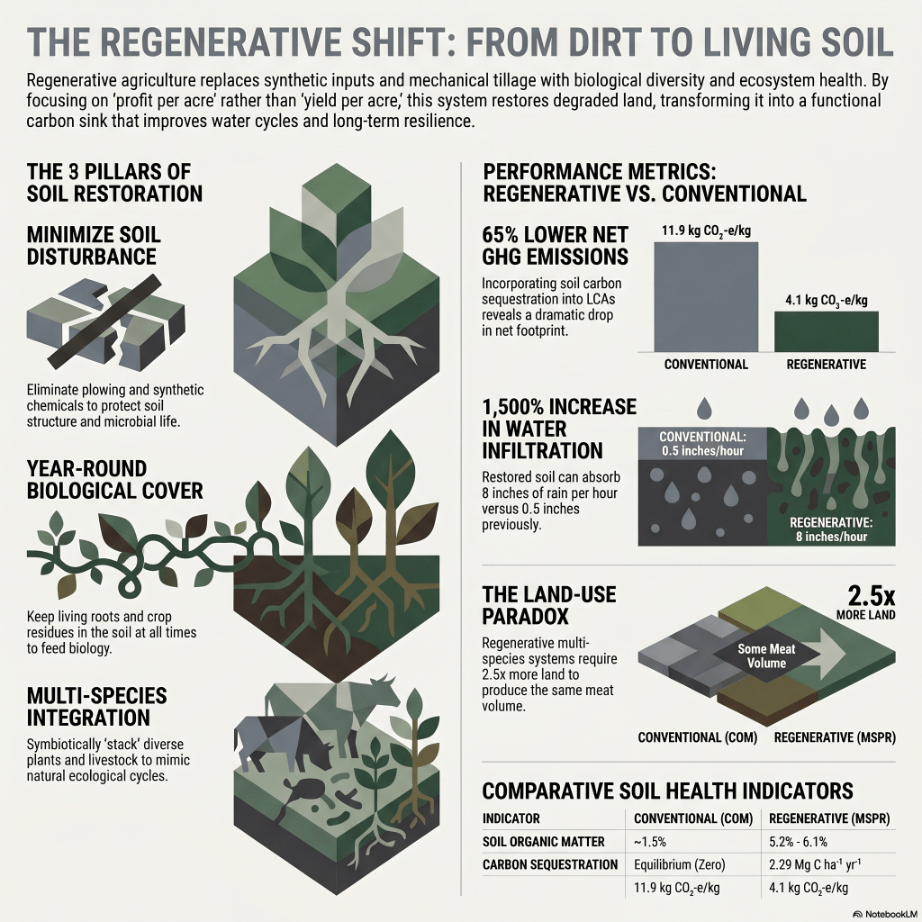
| Biochemical State | Uncoupled nutrient matrix; 140,000 compounds ignored or stripped. | Intact “Nutritional Dark Matter” supporting cellular signaling and immunity. |
| Primary Goal | Machine compatibility, speed, and shelf-life standardization. | “Healthy Soil, Healthy Plants, Healthy People” paradigm. |
——————————————————————————–
3. The Subsidy Trap: How the FFNSA Gridlocks Small Producers
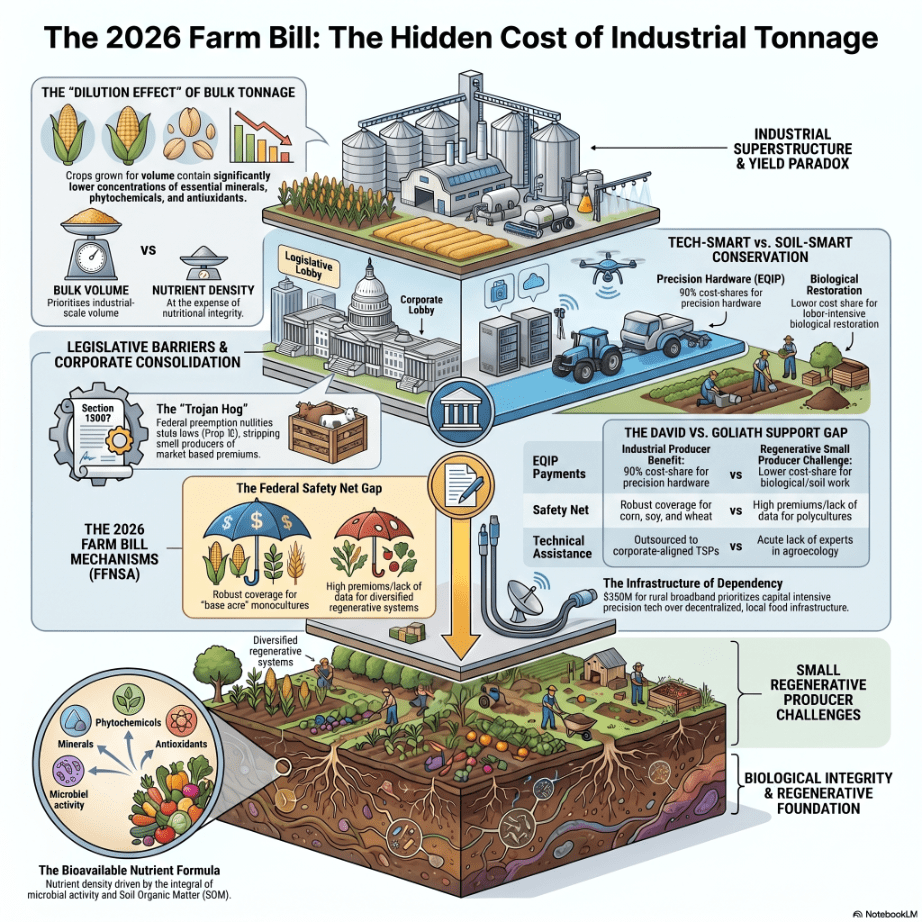
The FFNSA utilizes a “robbing Peter to pay Paul” funding strategy within Title II (Conservation). The bill siphons $1 billion from the Conservation Stewardship Program (CSP)—the primary vehicle for building on-farm conservation—to fund new state and Tribal soil health grants. This occurs while 47% of current CSP applicants are already turned away due to funding shortages. While the bill codifies a $4,000 minimum CSP payment to reduce administrative burdens, this is a hollow victory when the program’s core funding has been cannibalized.
The bill further entrenches the “Subsidy Trap” by maintaining discriminatory payment limits. Organic and diversified producers are capped at $200,000 for conservation assistance, while conventional industrial operations are granted a limit of $450,000. This disparity ensures that the transition to nutrient-dense production remains financially prohibitive for small-scale operations.
Compliance Barriers for Small Farmers:
- Mandatory Base Acre Update Failure: The FFNSA rejected a mandatory update to “base acres.” Commodity payments continue to be made for crops planted decades ago, rewarding “waste, fraud, and abuse” on unplanted land rather than reflecting modern, diversified polyculture production.
- Precision Agriculture Cost-Share Bias: The bill mandates a 90% cost-share for precision agriculture. This high-cost, technology-heavy solution consumes an outsized portion of Title II resources, favoring industrial operations over scale-neutral, biological management practices.
- The Polyculture Trap: By funneling the vast majority of safety-net funding toward corn and soy monocultures, the FFNSA effectively gridlocks producers attempting to diversify into specialty crops or perennial systems.
——————————————————————————–
4. The War on Soil Microbiology: Chemical Incentives vs. Perennial Health
The biological foundation of nutrition begins in the rhizosphere. Soil-dwelling microbial symbionts play a critical role in modulating plant uptake of minerals, which form the regulatory backbone of human physiology. The FFNSA, however, incentivizes a chemical-heavy model that disrupts these microbial communities.
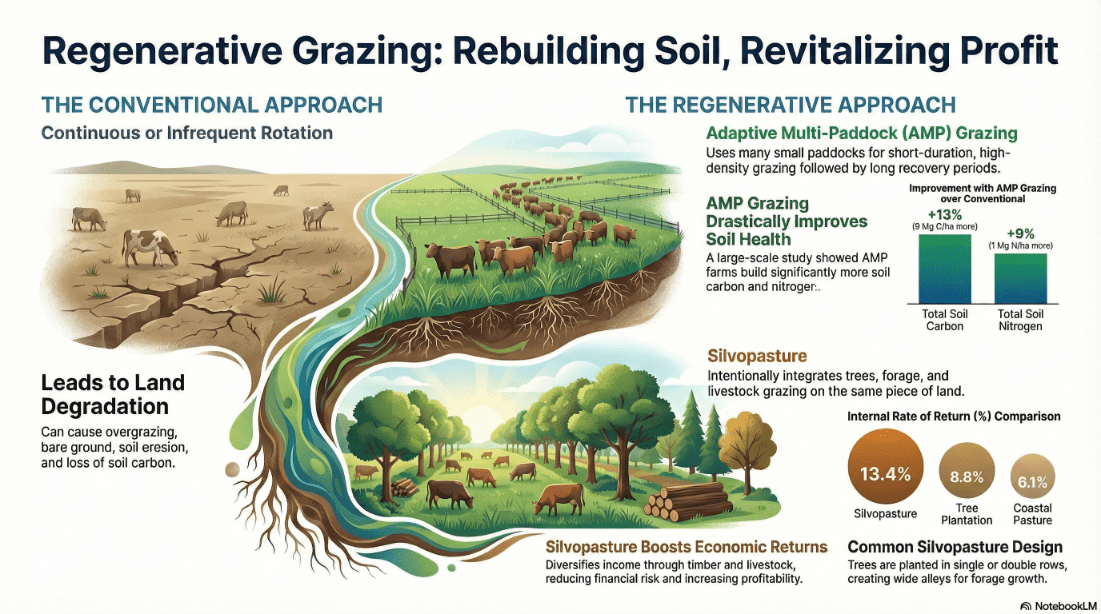
The bill grants “pesticide labeling uniformity,” effectively providing a liability shield to manufacturers like Bayer (Roundup/Glyphosate). By preempting state and local health regulations, the FFNSA prevents jurisdictions from requiring “failure-to-warn” labels. This is not merely a legal shield; it is an endorsement of a system that favors chemical immunity over soil health and perennial transitions like agroforestry, which were largely ignored in the final text.
Case Study: The Hawaii Heptachlor Incident To illustrate the risk of pesticide-heavy monocultures, we look to Hawaii, where dairies were forced to dump 36 million gallons of milk. Cows consumed pineapple tops sprayed with the pesticide Heptachlor, which then contaminated the entire local food chain. The FFNSA’s removal of local regulatory oversight increases the likelihood that similar bioaccumulative contamination events will bypass safety thresholds in the future.
——————————————————————————–
5. Corporate Consolidation: Stability for the “Top Four”
The FFNSA includes “poison pills” designed to shield industrial incumbents from legal and economic pressure. A primary provision targets California’s Proposition 12, seeking to eliminate state authority to set livestock welfare standards. This serves the interests of the “Top Four” pork and beef processors at the expense of small producers who have invested in higher standards. Furthermore, these shields arrive just as the DOJ’s broader meatpacker probe and Agri Stats settlements expose the depth of industrial price-fixing and market manipulation.
Perhaps most egregious is the “Project Diversity” requirement in the Energy Title. Framed as a neutrality measure, it establishes a “hard rule” against USDA incentives for solar projects on farmland. This is an intentional restriction of farmer economic independence, preventing producers from using solar revenue to diversify income and weather the current “economic storm” plaguing rural America.
Corporate Protection Clauses:
- Liability Shields: Granting pesticide manufacturers immunity from state-level health-related litigation.
- Livestock Standard Preemption: Overturning state standards (e.g., Prop 12) to ensure industrial processors face no welfare-based market barriers.
- Solar Revenue Restriction: Blocking farmers from accessing USDA support for on-farm renewable energy to protect current utility and industrial land models.
——————————————————————————–
6. A Future for Human Vitality: The Grassroots Paradigm Shift
Where federal policy has failed, decentralized movements are rising. New York City’s 2026 “Plant-Forward” food standards represent a new baseline, restricting artificial colors, eliminating processed meats from agency meals, and prioritizing minimally processed proteins.
Parallel to this is the emergence of the “NuCal” metric—a nutritional quality measurement that evaluates foods based on their essential nutrient density relative to their caloric cost. Unlike the tonnage-based metrics of the FFNSA, NuCal rewards foods rich in “Nutritional Dark Matter.” Transitioning to a decentralized procurement system based on these standards is the only way to restore the American food matrix.
——————————————————————————–
Action Blueprint: Reclaiming the Food System
To transform our agricultural policy from a tonnage-based disaster into a system of human vitality, we demand:
- Nutrient-Density Based Subsidies: Shift the primary metric for federal support from “yield-per-acre” to “nutrition-per-acre,” using the NuCal metric to reward biological quality.
- Parity in Payment Limits: Abolish the discriminatory $200,000 cap on organic and regenerative growers; provide equal access to the $450,000 limit currently reserved for conventional industrial operations.
- Decentralized Procurement Standards: Adopt NYC-style agency procurement nationwide to prioritize regional food systems that protect the rhizosphere and restore the link between “Healthy Soil, Healthy Plants, and Healthy People.”